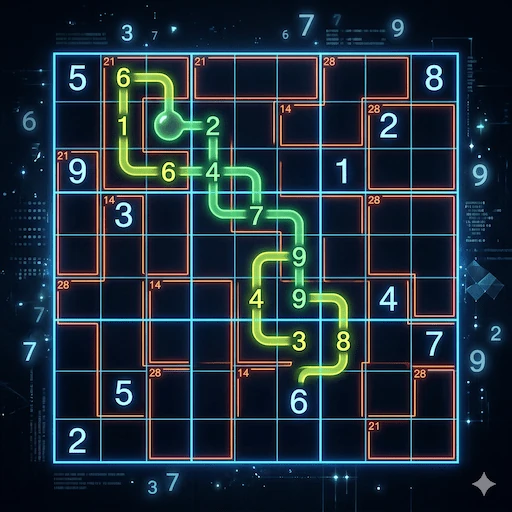
Sudoku is no longer just a simple 9×9 number puzzle. Over the years, puzzle creators have introduced dozens of creative and challenging Sudoku variants that push logical thinking to its limits. From additional constraints like cages and thermometers to advanced chain-based deductions, these variants offer a completely different level of difficulty.
If you are searching for the hardest Sudoku variants, wondering which Sudoku type is the most difficult, or looking to challenge yourself beyond classic puzzles, this comprehensive guide will rank the top 10 hardest Sudoku variants and explain why they are so challenging.
This article also includes expert-level solving tips, difficulty comparisons, and strategies to help you improve your skills across different Sudoku puzzle types.
How Sudoku Difficulty Is Measured
Before ranking the hardest Sudoku variants, it is important to understand what makes a Sudoku puzzle difficult. Difficulty is not just about the number of clues but about the complexity of logical deductions required.
- Number of constraints (rules beyond standard Sudoku)
- Interaction between constraints
- Requirement for advanced techniques (chains, forcing logic)
- Pattern recognition complexity
- Dependency on global vs local reasoning
With that in mind, let's explore the hardest Sudoku variants ranked from challenging to extremely difficult.
10. Classic Sudoku (Expert Level)
While classic Sudoku is the foundation of all variants, expert-level puzzles can still be extremely challenging.
Why it's hard:
- Requires advanced techniques like X-Wing and chains
- No additional constraints to guide solving
- Heavy reliance on candidate tracking
Best for: Players building advanced logic skills.
9. Thermo Sudoku
Thermo Sudoku introduces thermometer-shaped lines where numbers must increase from the bulb to the tip.
Why it's hard:
- Strong positional constraints
- Long thermometers create chain dependencies
- Requires range analysis and propagation
Key strategy: Focus on minimum and maximum values along thermometers.
8. Killer Sudoku
Killer Sudoku combines arithmetic with Sudoku logic using cages with fixed sums.
Why it's hard:
- Requires memorizing number combinations
- Overlapping constraints (sum + Sudoku rules)
- Advanced deduction needed for large cages
Key strategy: Use the 45 rule and combination elimination.
7. German Whisper Sudoku
German Whisper Sudoku uses colored lines where adjacent digits must differ by at least 5.
Why it's hard:
- Forces alternating low-high patterns
- Highly restrictive candidate sets
- Complex chain interactions
Key strategy: Exploit low-high alternation patterns.
Play German Whisper Sudoku Online
6. Arrow Sudoku
Arrow Sudoku requires digits along arrows to sum to the number in the circle.
Why it's hard:
- Combines arithmetic with positional logic
- Requires forward and backward deduction
- Heavy interaction between arrows
Key strategy: Track sum relationships carefully.
5. Sandwich Sudoku
Sandwich Sudoku introduces clues representing sums between 1 and 9 in rows or columns.
Why it's hard:
- Indirect constraints
- Requires positional deduction of endpoints
- Complex interactions with standard rules
Key strategy: Identify positions of 1 and 9 early.
4. Skyscraper Sudoku
Skyscraper Sudoku adds visibility clues based on building heights.
Why it's hard:
- Abstract rule interpretation
- Requires spatial reasoning
- Difficult candidate elimination
Key strategy: Use edge clues to narrow possibilities.
3. Renban Sudoku
Renban Sudoku requires digits on a line to form a consecutive sequence in any order.
Why it's hard:
- Flexible but restrictive constraints
- Requires sequence reasoning
- Strong interaction with grid structure
Key strategy: Identify possible number ranges quickly.
2. Killer + Thermo Hybrid Sudoku
Hybrid puzzles combine multiple variant rules, such as Killer and Thermo constraints.
Why it's hard:
- Multiple overlapping constraints
- High complexity interactions
- Requires expert-level reasoning
Key strategy: Break down constraints step by step.
1. Variant Sudoku with Chains and Advanced Logic
The hardest Sudoku puzzles often involve multiple rules combined with advanced solving techniques like forcing chains, ALS, and complex pattern recognition.
Why it's hardest:
- Requires deep logical deduction
- Minimal direct clues
- Heavy reliance on chains and advanced techniques
Key strategy: Use structured chain logic and avoid guessing.
Which Sudoku Variant Is the Hardest?
The hardest Sudoku variant depends on the solver's skill level. However, hybrid and chain-heavy puzzles consistently rank as the most difficult due to their complexity and logical depth.
For beginners, even Thermo or Killer Sudoku may feel extremely challenging, while experts may find hybrid puzzles the ultimate test.
Tips to Solve Hard Sudoku Variants
- Learn one variant at a time
- Master basic techniques before advanced ones
- Practice pattern recognition
- Use logical deduction instead of guessing
- Study common solving strategies for each variant
Why Hard Sudoku Variants Are Popular
Hard Sudoku variants attract players because they offer:
- Deeper logical challenges
- More satisfying solutions
- Creative puzzle design
- Endless variety
They are especially popular among experienced players who want to go beyond classic Sudoku.
Conclusion
Sudoku has evolved into a rich ecosystem of puzzle variants, each offering unique challenges and solving experiences. From classic Sudoku to complex hybrid puzzles, the difficulty spectrum continues to expand.
By exploring these top 10 hardest Sudoku variants, you can push your logical thinking to new heights and discover which type of puzzle suits your style best.
Whether you are aiming to master Killer Sudoku, explore Thermo puzzles, or tackle advanced chain-based challenges, consistent practice and structured thinking will help you succeed.
Ready to challenge yourself?