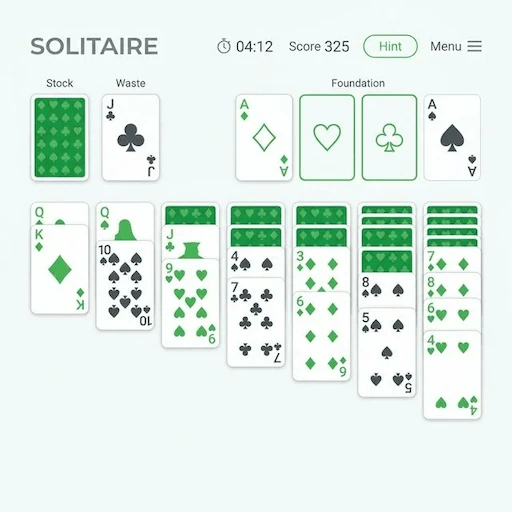
Classic Solitaire, known as Patience in many regions, is more than a casual card game. It is a historical artifact, a digital training tool, and a timeless logic challenge.
From uncertain beginnings in Europe to mass adoption through personal computers, Solitaire has survived every gaming trend.
1. Early Origins in Europe
Historians generally trace Solitaire to Northern Europe in the late 18th century. Early variants were linked not only to leisure but also to fortune-telling rituals in aristocratic circles.
In Britain and much of Europe, the game is still called Patience, reflecting its slow and deliberate pace. In North America, the term Solitaire became dominant and emphasized single-player play.
2. The Napoleon Legend
A famous story says Napoleon Bonaparte played Solitaire during exile on St. Helena. Evidence is mixed, but the legend endured and inspired variants such as "Napoleon at St. Helena."
Whether historically exact or not, the myth helped cement Solitaire as a game associated with reflection, strategy, and solitude.
3. The 1990 Turning Point: Microsoft Solitaire
When Microsoft shipped Solitaire with Windows 3.0 in 1990, the game reached a new audience. It was not just entertainment—Microsoft used it to teach mouse control and drag-and-drop interaction.
Millions of first-time users learned core computer habits by moving virtual cards.
4. Why Solitaire Still Works Today
- Calm focus: predictable rhythm helps reduce stress.
- Low barrier: easy to start, hard to master.
- Variant depth: Klondike, FreeCell, Spider and many more.
5. Play Classic Solitaire on SimFuns
SimFuns keeps Solitaire clean, responsive, and distraction-free. Whether you have 5 minutes or a full strategy session, you can play with clear visuals and smooth controls.
Ready for your next run? Play Classic Solitaire on SimFuns now.